Initiated by ISAE-SUPAERO, the Chair is supported by two global leaders in the aerospace industry: Airbus and Ariane Group. Created to answer the challenges of the next space missions, the Chair leads studies on advanced space concepts, in other words design of unidentified systems, some of which are even inspired from Science Fiction . Future missions to explore the solar system face many challenges such as managing space debris, autonomous navigation missions to asteroids, in-orbit maintenance of satellites (ex telecommunications), space traffic management and the architecture of manned space stations on the surface of the Moon or Mars.
Collaboration between researchers and industry is crucial for these future missions. “We have transitioned from a period during which space missions had a singular, nearly artisanal aspect, to an era of industrialization of space concepts making possible regular activities in space”, explains Stéphanie Lizy-Destrez, associate professor and head of the Chair for Advanced Space Concepts (SaCLab).
The SacLab is affiliated with the Department of Aerospace Vehicles Design and Control (DCAS) at ISAE-SUPAERO. It has a diverse spectrum of expertise including system architecture and engineering, mission analysis and optimization, human factors or robotics, to answer the following integrated themes: In-orbit servicing for telecommunication satellites; In-space structural assembly – 3D printing; Active Debris Removal; Architecture of manned space stations (Moon and Mars); Space weather; Architecture of new space transport systems (reuse, concepts integrating innovative space propulsion systems).
ISAE-SUPAERO
ISAE-SUPAERO is developing a research policy that is very much oriented towards the future needs of industry in the field of aerospace engineering or high technology. This proximity to the industrial world is also characterized by the development of a policy of sponsorship agreements in strategic areas and by the participation in teaching of many professionals who present to students the latest technological innovations and the best industrial practices. At the international level, ISAE-SUPAERO - one of the world leader aerospace engineering schools - cooperates with the best European universities (Cranfield, TU Delft, KTH Stockholm, ETSIA Madrid, TU Munich, Pisa) thanks to the Erasmus+ program, and North American (MIT, Caltech, Stanford, Berkeley...) universities.
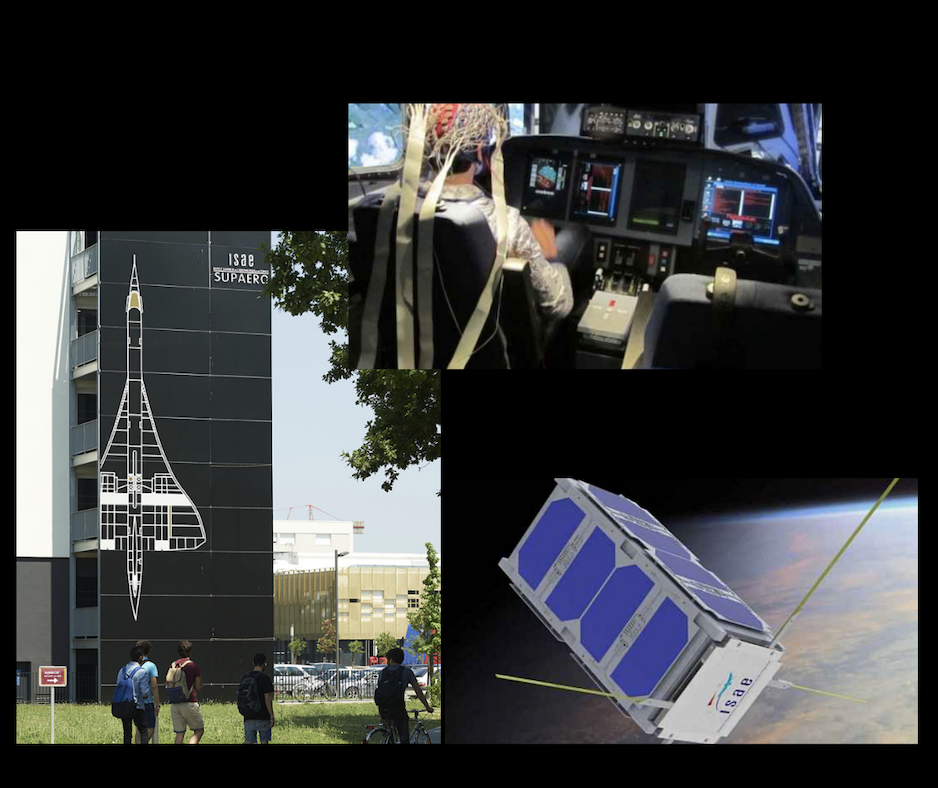
Discover the progress of the work of the Space Saclab Chair at ISAE-SUPAERO. A Chair of Patronage supported by ArianeGroup and Airbus. A Chair that enables the development of the study of future space concepts from a systems and architecture perspective through research and teaching projects that will be developed within the framework of a Space Advanced Concepts laboratory (SAC LAB).
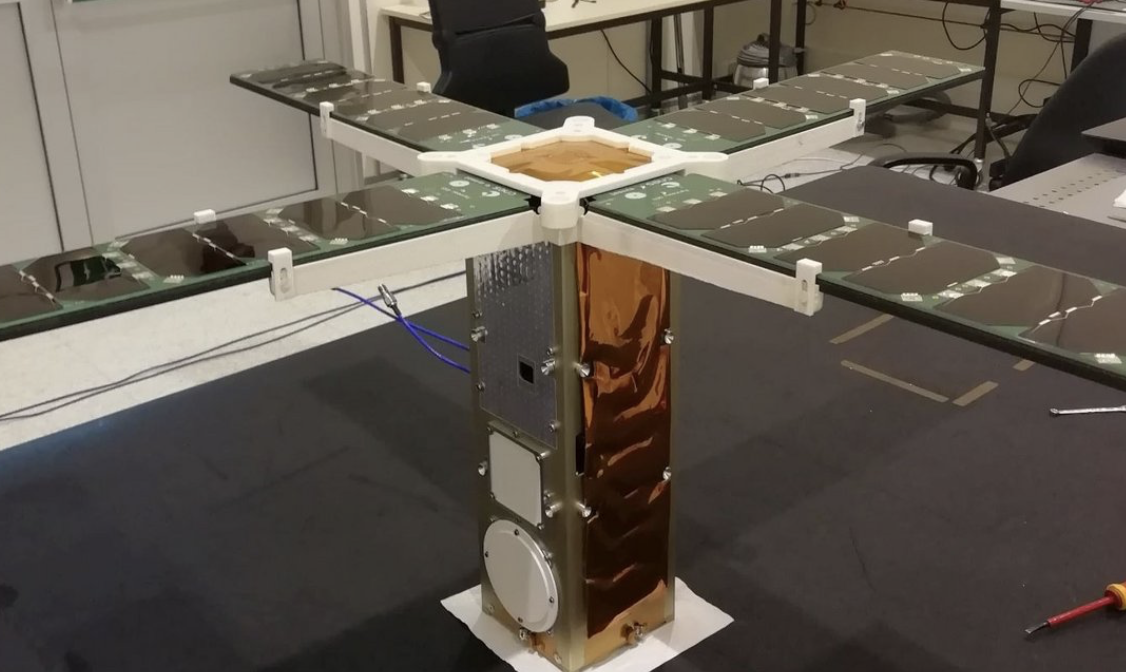
EntrySat, the very first French 3U cubesat, was deployed from the International Space Station (ISS) on July 3rd at 16:25 UTC (18:25 local time). The main objectives of the EntrySat mission were to study the atmospheric re-entry of space debris. Additionally, EntrySat was supposed to conduct communication experiments with the ground and measure atmospheric characteristics.